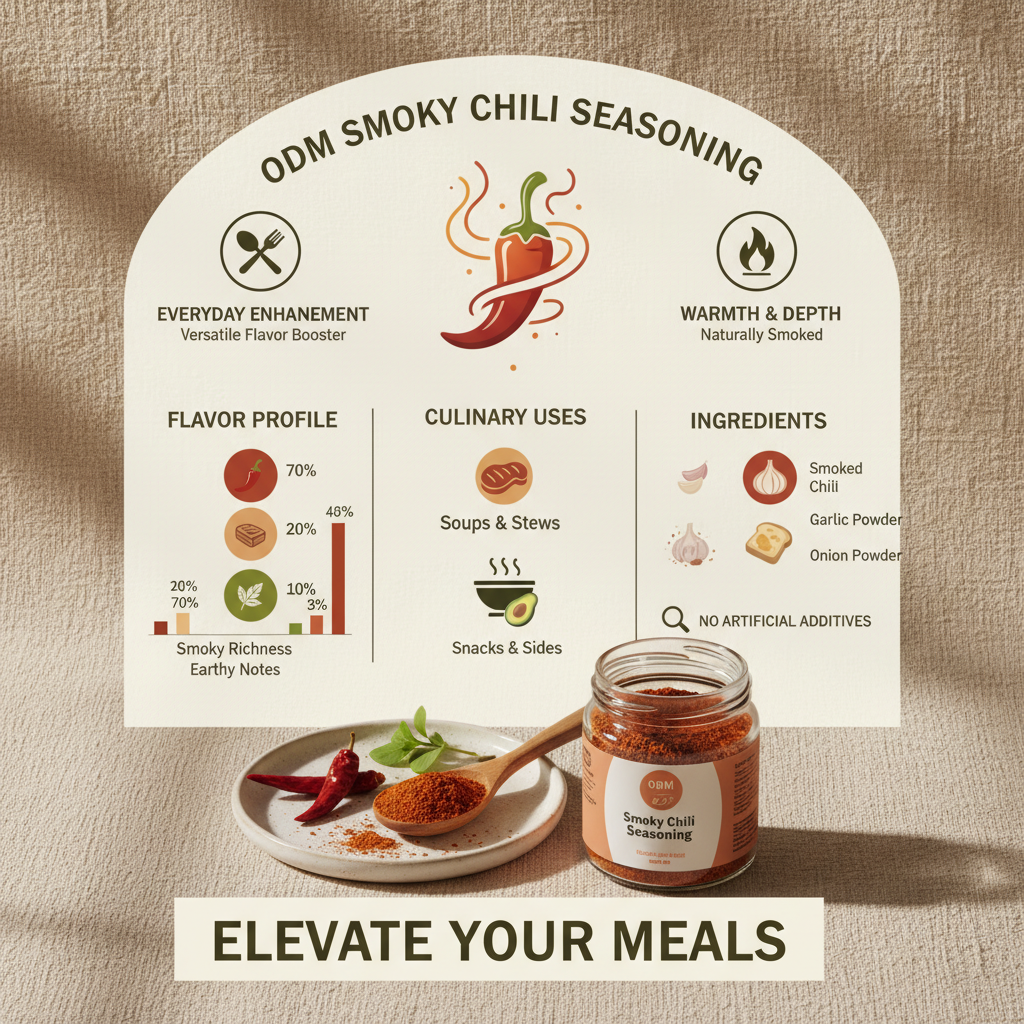
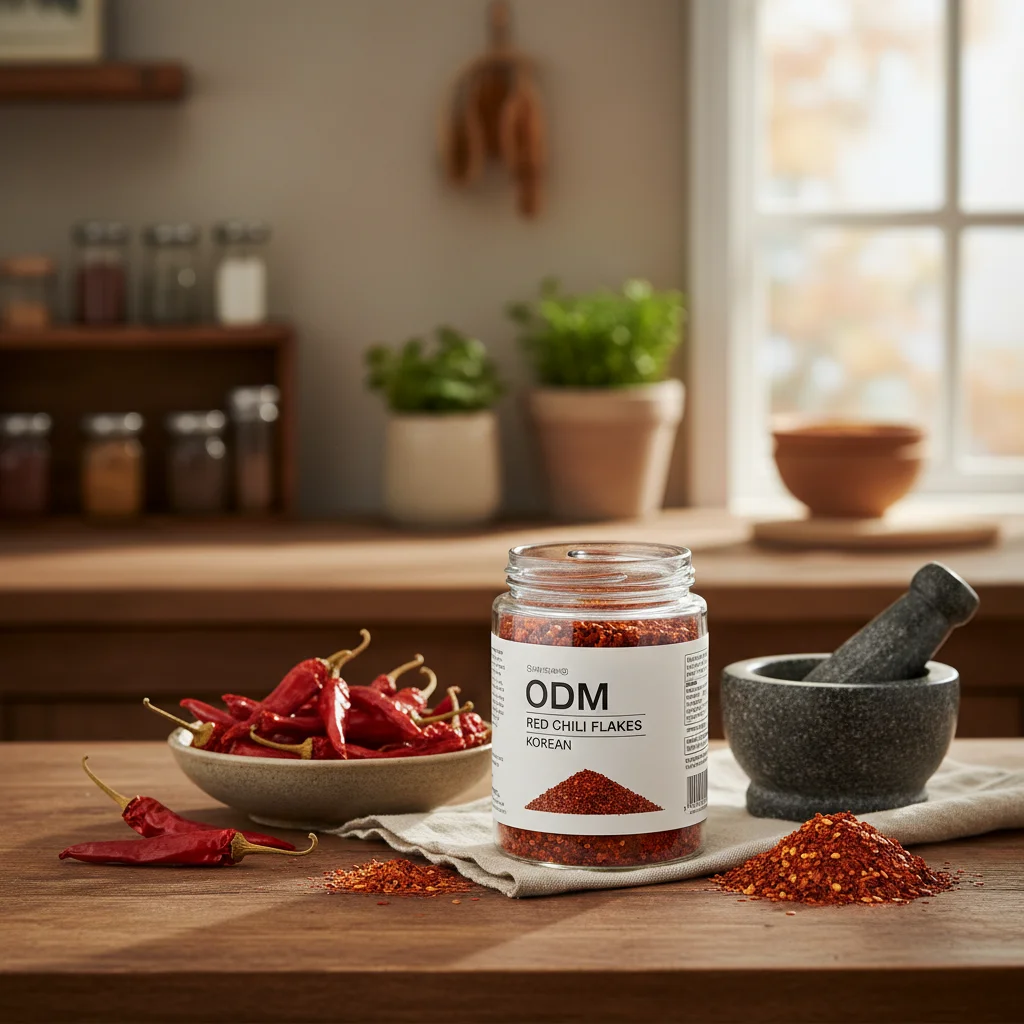
In the competitive landscape of the global spice market, the demand for complex, multi-dimensional flavors has led to the rise of odm smoky chili seasoning. This specialized blending approach allows food brands to integrate the deep, woody notes of smoked peppers with the sharp heat of premium chilies, creating a sensory experience that appeals to modern consumers seeking "authentic" and "artisan" taste profiles.
From a commercial perspective, utilizing an Original Design Manufacturing (ODM) model for smoky chili seasonings enables companies to bypass the immense capital expenditure required for smoking facilities and precision grinding machinery. By partnering with experts in seasoning manufacturing, brands can rapidly iterate on flavor profiles, ensuring their products meet strict regional taste preferences while maintaining consistent quality across massive production batches.
Understanding the technical nuances of odm smoky chili seasoning—from the selection of the raw chili pods to the specific temperature of the smoking process—is essential for any food enterprise looking to scale. Whether it is for the snack industry, ready-to-eat meals, or gourmet condiments, the right smoky profile can be the deciding factor in market penetration and consumer loyalty.
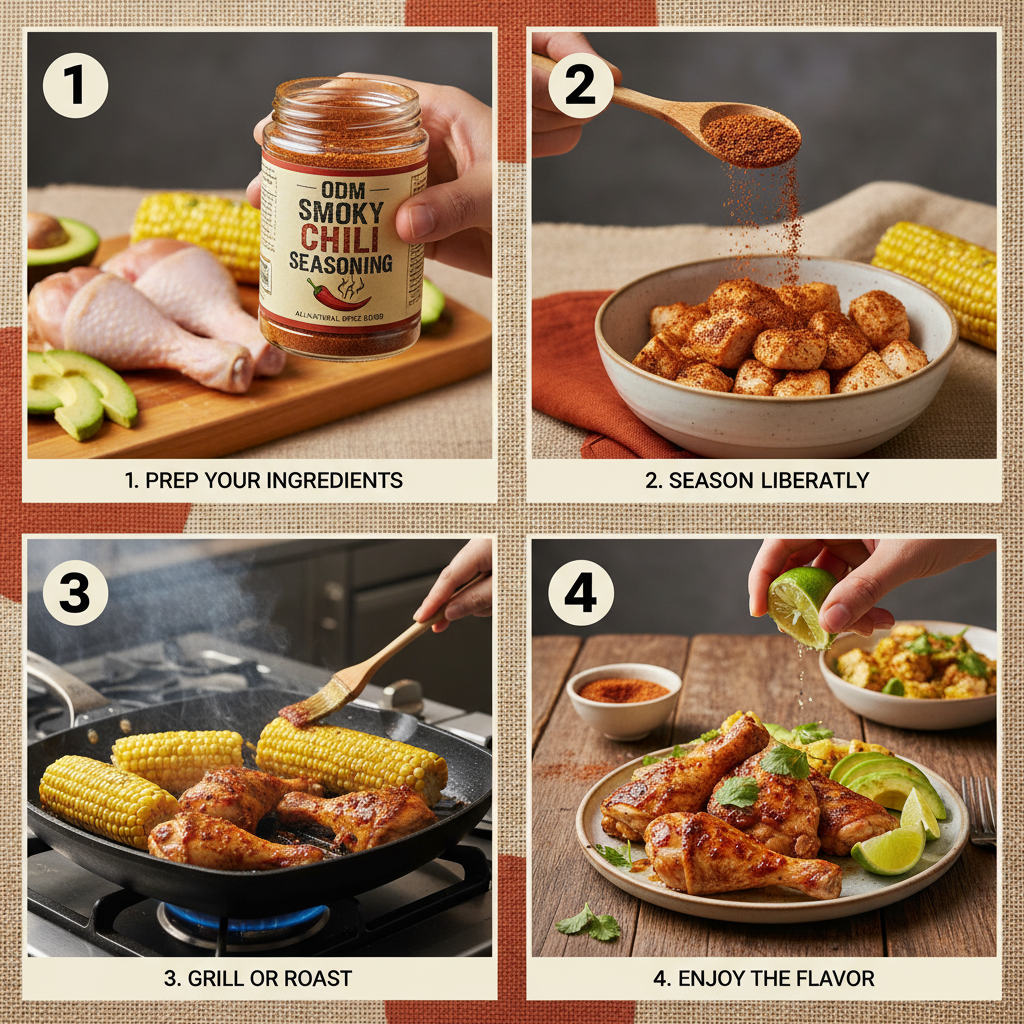
The Global Market Context of ODM Smoky Chili Seasoning
The global appetite for spicy foods is no longer limited to traditional hubs in Asia or Mexico. According to recent market analysis and ISO standards for food additives, there is a surging trend toward "fusion" flavors, where the smokiness of traditional BBQ meets the pungent heat of various chili cultivars. This shift has placed odm smoky chili seasoning at the center of the snack and condiment industry, as brands strive to offer sophisticated palettes without sacrificing speed-to-market.
However, achieving a consistent "smoky" note is a significant industrial challenge. Many manufacturers struggle with the volatility of natural smoke and the uneven distribution of heat in large-scale powder blends. By shifting to an ODM model, food companies can leverage specialized technology—such as liquid smoke infusion or traditional slow-smoking of pods—to ensure every gram of seasoning provides the same depth of flavor and heat level.
Defining ODM Smoky Chili Seasoning in Modern Food Tech
At its core, odm smoky chili seasoning refers to a comprehensive manufacturing partnership where a seasoning expert designs, develops, and produces a customized smoky-heat blend for a client brand. Unlike simple OEM (Original Equipment Manufacturing), where a factory merely follows a recipe, ODM involves the creative and technical development of the flavor profile itself, utilizing the manufacturer's R&D capabilities to balance capsaicin levels with aromatic smoke compounds.
This approach is deeply connected to the humanitarian and economic need for food standardization. As global supply chains face volatility, the ability to produce a stabilized, shelf-ready seasoning that mimics artisan smoking processes ensures that high-quality, flavorful food remains accessible and affordable across different socioeconomic regions. It bridges the gap between high-end gourmet culinary arts and mass-market industrial production.
Furthermore, the "smoky" element is achieved through a variety of methods, including the use of Sweet Paprika Powder or Gochugaru, which are then subjected to controlled smoking environments. The result is a versatile powder that can be applied to everything from extruded snacks to processed meats, providing a complex taste that suggests a traditional wood-fired cooking process.
Core Components of High-Quality Smoky Seasonings
The foundation of a superior odm smoky chili seasoning begins with the raw material selection. Utilizing high-grade Chili Crushed or Chili Pods ensures that the natural oils and capsaicin are preserved, providing a clean heat that doesn't overpower the delicate smoky notes.
A critical component is the "smoke-to-heat ratio." In a professional ODM setting, technicians calibrate the balance between the aromatic phenols (which provide the smoky scent) and the heat units (measured in Scoville) of the chili powder. This ensures that the odm smoky chili seasoning remains balanced, preventing the smoke from tasting "artificial" or the heat from becoming caustic.
Finally, stability and solubility are paramount. Whether the seasoning is intended for a dry rub or a wet marinade, the particle size—achieved through precise milling of Chili Powder or Chili Seeds Oil—must be uniform. This prevents clumping and ensures that the smoky flavor is distributed evenly across the food surface during the industrial coating process.
Technical Factors Driving Performance and Scalability
When evaluating the performance of odm smoky chili seasoning, manufacturers focus on four primary metrics: flavor longevity, heat consistency, particle adherence, and cost-efficiency. The ability to maintain a smoky aroma after high-temperature baking or frying is what separates industrial-grade seasonings from home-made blends.
Scalability is achieved through the integration of automated blending systems that can handle tons of raw chili material while maintaining a tolerance of +/- 0.1% in ingredient ratios. This precision allows brands to expand from a local pilot project to a global product launch without the risk of flavor drift.
Comparative Performance Metrics for ODM Smoky Chili Seasoning Methods
Global Applications and Industrial Use Cases
The versatility of odm smoky chili seasoning allows it to be deployed across diverse culinary sectors. In the North American market, it is heavily utilized in the "bold" snack category, particularly for corn chips and roasted nuts, where the smoky profile complements the savory nature of the base product. In Europe, it is often integrated into gourmet condiments and vegan meat alternatives to provide the "char-grilled" taste that is typically missing from plant-based proteins.
Beyond the retail shelf, these seasonings are critical in industrial food service and remote catering. For instance, in large-scale military rations or post-disaster relief food kits, the addition of a high-impact smoky chili seasoning can significantly improve the palatability of basic caloric staples, providing a psychological boost through familiar, comforting flavors while remaining stable in extreme temperature fluctuations.
Long-Term Commercial Value and Brand Advantages
Investing in a customized odm smoky chili seasoning provides a brand with a "flavor moat"—a unique taste profile that is difficult for competitors to replicate without the same ODM partnership. This exclusivity fosters deep consumer trust and brand loyalty, as the specific balance of smoke and heat becomes synonymous with the product's identity.
From a logical standpoint, the ODM model offers unparalleled cost-efficiency. Brands eliminate the need for complex smoke-house infrastructure and the associated environmental permits required for large-scale smoking operations. Instead, they convert a fixed capital expenditure into a variable operating cost, allowing for more agile pivots in product strategy.
Moreover, the emotional connection to "smoky" flavors often triggers associations with tradition, authenticity, and warmth. By leveraging professional seasoning technology, brands can evoke these feelings in a mass-market product, creating a perception of high-value craftsmanship that justifies a premium price point.
Future Trends in Smoky Chili Seasoning Innovation
The future of odm smoky chili seasoning is moving toward "Clean Label" innovation. There is an increasing demand for smoke flavors derived from natural organic wood extracts rather than synthetic additives. This trend is driving the development of advanced freeze-drying and vacuum-infusion technologies that lock in the aromatic compounds of real smoke without adding unwanted chemicals.
Digital transformation is also playing a role. AI-driven flavor mapping is now being used to predict which combinations of smoky chili and other botanicals will trend in specific geographic regions. This allows ODM partners to propose "future-proof" seasonings to their clients before the market trend even peaks.
Sustainability remains the overarching goal. The industry is shifting toward sourcing chilies from regenerative farms and using energy-efficient smoking kilns that reduce carbon emissions. The following table summarizes the key evolution paths for the industry.
Evolutionary Analysis of ODM Smoky Chili Seasoning Technology
| Innovation Dimension |
Traditional Approach |
Modern ODM Standard |
Future Trend |
| Smoke Sourcing |
Simple liquid smoke |
Natural wood-fired pods |
Organic bio-extracts |
| Heat Control |
Manual batch mixing |
Computerized dosing |
AI-optimized profiles |
| Particle Size |
Coarse ground |
Micro-milled powder |
Nano-encapsulated |
| Sustainability |
High waste/emissions |
ISO-certified efficiency |
Carbon-neutral production |
| Market Reach |
Local/Regional |
Global distribution |
Hyper-personalized |
| Certification |
Basic food safety |
HACCP/BRC/Halal |
Full-cycle Traceability |
FAQS
Unlike standard chili powder, which focuses primarily on heat and color, odm smoky chili seasoning integrates a complex aromatic profile achieved through smoking processes. It is a formulated blend—often combining various chili types like Gochugaru or Paprika with specific smoke compounds—designed by R&D experts to provide a specific "grilled" or "charred" taste while maintaining a precise Scoville heat level.
The key lies in the ODM partner's smoking technology. Using natural wood-fire smoking of the chili pods before grinding, rather than simply adding synthetic smoke flavors post-production, creates a deeper, more authentic profile. We recommend testing multiple "smoke-to-heat" ratios to find the balance that feels natural to your target consumer's palate.
Yes, but the formulation differs. For dry applications (like snacks), we focus on particle adherence and anti-caking agents. For wet applications (like sauces), we emphasize solubility and the stability of the smoky oils. A professional ODM service will provide different versions of the same flavor profile tailored to your specific application method.
Typically, the process takes 2 to 6 weeks. This includes the initial flavor profiling, sampling, client feedback loops, and final stability testing. Once the recipe is locked, mass production can be scaled quickly depending on the raw material availability of the specific chili pods required.
Absolutely. By selecting organic-certified chili sources and ensuring the smoking process uses only natural hardwoods without chemical additives, we can produce seasonings that meet strict vegan, organic, and non-GMO standards. Always specify your certification requirements during the design phase.
We utilize high-precision lab testing for every batch of incoming raw chilies to determine their exact heat levels. Since natural chilies vary, we "standardize" the blend by mixing high-heat and low-heat lots to reach a consistent target Scoville rating, ensuring your end product never tastes too spicy or too mild.
Conclusion
The implementation of odm smoky chili seasoning represents a strategic shift in food manufacturing, moving away from generic ingredients toward highly engineered, brand-specific flavor experiences. By balancing the raw power of premium chilies with the sophisticated allure of smoke, brands can create products that resonate with a global audience, ensuring consistency, scalability, and a distinct competitive edge in a crowded marketplace.
As we look toward the future, the integration of sustainable sourcing and AI-driven flavor design will further refine the potential of smoky seasonings. For food enterprises aiming to innovate, the path forward lies in partnering with ODM experts who can translate culinary art into industrial reality. To elevate your product line with authentic, scalable flavors, visit our website: www.xurichili.com.