

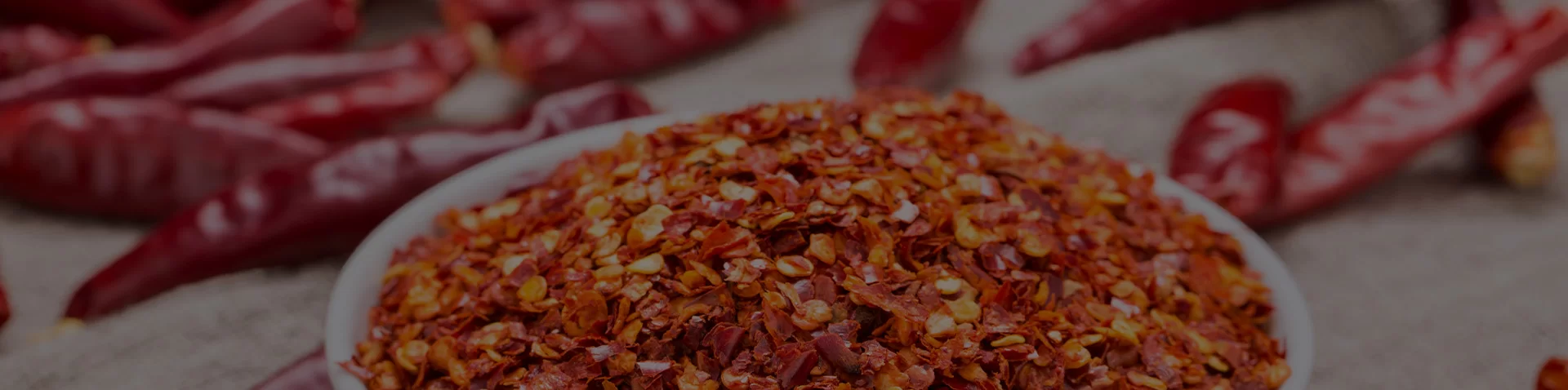

For commercial food manufacturers, the procurement of high-potency crushed chili is more than a simple ingredient purchase; it is a critical component of flavor engineering. Achieving a consistent sensory profile across millions of units requires a precise balance of pungency, visual appeal, and microbiological safety. This guide examines the technical requirements for professional-grade chili flakes, focusing on how specific parameters like SHU levels and particle distribution affect the final product quality.
In the B2B spice landscape, the shift toward odm making hot pepper flakes allows brands to customize their heat profiles and visual textures without investing in their own deep-processing infrastructure. Whether producing artisanal pizzas, industrial sausages, or gourmet soups, the ability to control seed content and sterilization methods ensures that the product meets strict safety standards while maintaining the natural aromatic properties of the pepper.
Readers will explore the essential criteria for evaluating a chili supplier, the impact of microwave heat and steam sterilization on shelf life, and the specific purity standards required for entry into the EU and US markets. By understanding these technical levers, procurement officers can reduce batch-to-batch variance and ensure total compliance with international food safety certifications such as BRC and FDA.
Strategic Sourcing for Industrial Chili Flakes
The industrial production of crushed chili involves a complex transition from raw harvest to a stabilized, food-grade condiment. For a B2B buyer, the primary risk is "flavor drift," where the heat level or color of the chili varies between shipments. To mitigate this, leading processors utilize dedicated farms to control the raw material source, ensuring that the base pepper possesses the inherent chemical properties required for a consistent Scoville Heat Unit (SHU) rating. Technical excellence in this sector is defined by the ability to maintain a purity level of 100% dried chili, completely free from synthetic dyes like Sudan Red, which is a non-negotiable requirement for health-conscious global markets.
Designing High-Performance Chili Specifications
Selecting the right specifications is a matter of balancing sensory impact with operational efficiency. The following seven dimensions represent the core technical levers available during the customization process to ensure the ingredient fits the specific application.
Heat Intensity and SHU Consistency
Pungency is measured in Scoville Heat Units (SHU). For industrial applications requiring a bold burst of flavor, a level of 35,000 SHU provides a powerful aromatic profile. Consistency is achieved through rigorous batch testing to ensure that every 25kg bag delivers the same heat intensity, preventing unexpected flavor spikes in the final food product.
| Pungency Level | Sensory Effect | Typical Application | Buyer Evaluation |
|---|---|---|---|
| 35,000 SHU | High Potency | Industrial Sauces | Check for Batch Variance |
| Moderate SHU | Balanced Heat | Table Condiments | Color Consistency |
| Low SHU | Mild Aroma | Seasoning Blends | Aromatic Profile |
| Custom SHU | Tailored Heat | Brand Specific Recipes | Sample Validation |
| High Potency | Intense Burn | Extreme Snacks | SHU Certification |
| Standard Grade | Variable | General Use | Purity Testing |
Particle Size Engineering
The physical dimensions of the flake dictate how it integrates into a recipe. Options ranging from 0.5-2MM to 3-5MM allow manufacturers to choose between a fine powder-like integration or a coarse, visual "flake" appearance. For artisanal pizzas or soups, larger particles (3-5MM) are preferred for their visual impact, whereas 0.5-2MM is ideal for homogenous blending in sausage production.
Seed Ratio Management
Seeds contribute differently to the texture and heat of the product. Suppliers can offer flexible seed content—typically 50%, 30-40%, or completely deseeded. Deseeded options are essential for brands seeking a clean, red visual without the pale yellow of seeds, whereas high-seed versions are often used in traditional spice blends where the seed's nutty undertone is desired.
Microbiological Control Standards
Food safety in the spice industry hinges on the control of mycotoxins. For the European market, strict limits on Aflatoxin (< 5ug/kg) and Ochratoxin A (< 20ug/kg) are mandatory. Ensuring these levels are kept low prevents product recalls and ensures that the ingredient is safe for long-term consumption across diverse regulatory zones.
Sterilization Technology Impact
Traditional drying often leaves residual microbial loads. Modern facilities utilize microwave heat and steam sterilization to eliminate contaminants without the use of harsh chemicals. This process preserves the natural oils and color of the chili while significantly extending the shelf life, making it suitable for global shipping in 25kg Kraft bags.
Regulatory Compliance for Export
International trade requires rigorous certification. Compliance with ISO9001, ISO22000, BRC, FDA, and HALAL standards ensures that the product can enter the US and EU markets without customs delays. These certifications verify that the manufacturing process follows Global Food Safety Initiative (GFSI) principles.
Supply Chain Stability
For large-scale food companies, supply continuity is as important as quality. A production capacity of 500MT per month ensures that manufacturers can scale their production without facing ingredient shortages. Logistics optimization, such as loading 25MT per 40'FCL, further reduces the landed cost per kilogram.
FAQ
What is the significance of the 35,000 SHU rating for crushed chili?
A 35,000 SHU rating indicates a high-potency heat level that is particularly effective for industrial applications. It provides a strong, aromatic burn that remains detectable even when blended with other ingredients in sauces or meats, ensuring a consistent spicy profile across large production batches.
How does seed content affect the final product's application?
Seed content primarily affects the visual appearance and texture. 50% seed content is standard for traditional flakes, while 30-40% or deseeded options are chosen for premium products where a deep red color is required without the interruption of pale seeds, often seen in high-end artisanal pizza toppings.
Is the product suitable for the European Union (EU) market?
Yes, the product is specifically engineered to meet Europe Grade standards. This includes strict adherence to Aflatoxin limits (< 5ug/kg) and Ochratoxin A limits (< 20ug/kg), as well as certifications like BRC and ISO22000, ensuring it passes EU food safety inspections.
What are the advantages of microwave heat and steam sterilization?
Unlike chemical sterilization, microwave heat and steam sterilization eliminate pathogens and reduce the microbial load while preserving the volatile aromatic oils and natural red color of the chili. This results in a cleaner label and a longer shelf life for bulk exports.
Can the particle size be customized for specific OEM needs?
Absolutely. Particle sizes can be adjusted to specific ranges such as 0.5-2MM, 1-3MM, 2-4MM, or 3-5MM. This flexibility allows OEM partners to match the ingredient's texture to their specific recipe, whether it requires a fine blend or coarse flakes.
What packaging is used to maintain quality during long-distance shipping?
Bulk orders are packed in 25kg Kraft bags lined with a plastic film. This dual-layer system provides a critical moisture barrier, preventing clumping and protecting the product from humidity and contamination during transit to the USA, Canada, or Australia.
References and further reading
- International Organization for Standardization (ISO) - Food Safety Management Systems (ISO 22000).
- FDA Food Safety Modernization Act (FSMA) guidelines for imported spices.
- BRC Global Standard for Food Safety - Requirements for processing and packaging.


