

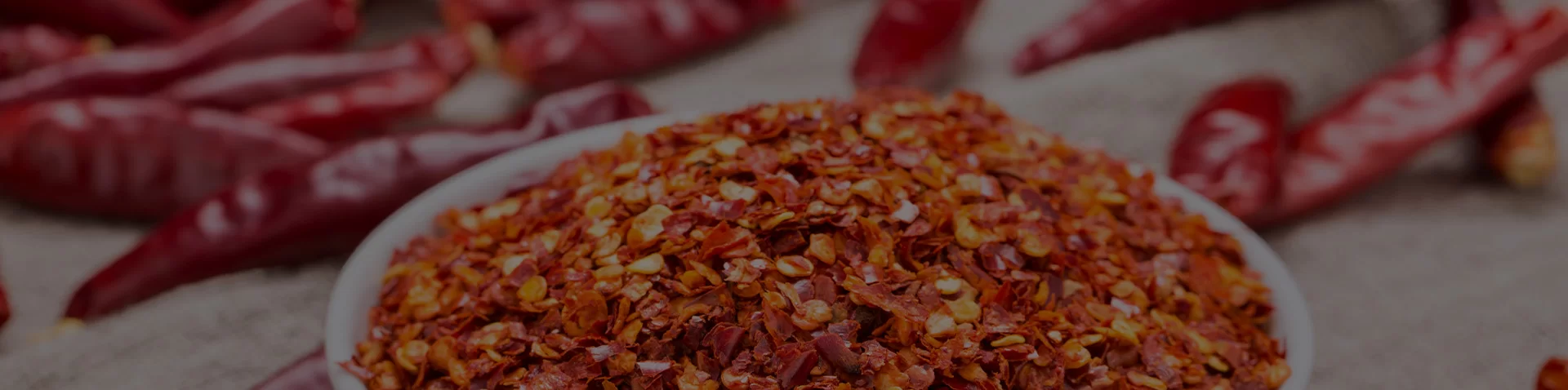

Industrial food production requires a precise balance of heat, color, and stability to ensure product consistency across millions of units. For food manufacturers and spice blenders, sourcing high-grade chili components involves more than just selecting a heat level; it requires a partner capable of deep processing and rigorous quality auditing. This guide explores the technical requirements of industrial chili flakes and how to evaluate suppliers for large-scale B2B procurement.
The challenge in the global spice market often lies in the variance of raw materials. From pesticide residues to fluctuations in Scoville Heat Units (SHU), a lack of standardization can lead to costly batch failures. To mitigate these risks, professional procurement teams focus on "Original Design Manufacturing" (ODM) capabilities, ensuring that the flake size, purity, and heat profile are engineered to meet specific recipe requirements rather than relying on generic commercial grades.
Readers will gain insights into the critical parameters of EU-grade spice production, the importance of certifications like BRC and HALAL in international trade, and the logistical considerations for importing bulk spices. By understanding the intersection of agricultural sourcing and industrial processing, buyers can better secure a stable supply of odm flake chili that meets global safety standards.
Technical Foundations of Chili Processing
Deep processing of chilies transforms raw agricultural produce into standardized industrial ingredients. This process begins with the selection of specific chili varieties, where the genetic profile determines the base heat and color potency. Once harvested, the drying process is critical; moisture levels must be strictly controlled—typically capped at 11%—to prevent the growth of molds and the development of mycotoxins like Aflatoxin and Ochratoxin A. The mechanical crushing and cutting phase then determines the physical geometry of the flake, which directly affects the release rate of capsaicin and the visual integration of the spice into the final food product. For industrial applications, this means moving beyond simple grinding toward precision cutting that preserves the integrity of the chili seed and skin, ensuring a consistent sensory experience for the end consumer.
Strategic Sourcing for Industrial Spice Solutions
When transitioning from small-batch procurement to industrial-scale supply, the focus shifts toward risk management and specification stability. A reliable supplier must provide transparency in their processing chain, from the farm level to the final packaging. The following dimensions are the primary criteria used by quality assurance teams to evaluate the viability of a spice partner.
Customized Flake Specifications
Industrial buyers often require specific particle sizes to ensure uniform distribution in sauces or dry rubs. Customization involves adjusting the milling and cutting parameters to achieve a specific mesh or flake width. This prevents "clumping" in automated dosing systems and ensures the visual appeal of the product remains consistent across different production lots.
| Specification Parameter | Commercial Grade | EU/Industrial Grade | Impact on Production |
|---|---|---|---|
| Particle Uniformity | Variable | High Precision | Blending Consistency |
| Moisture Content | 12-15% | Max 11% | Shelf-life Stability |
| Contaminant Testing | Basic | Rigorous (Metal/Pesticide) | Food Safety Compliance |
| Heat Range (SHU) | Broad Range | Narrow Tolerance | Flavor Standardization |
| Color Stability | Fades Quickly | Vibrant/Deep Red | Visual Product Appeal |
| GMO Status | Unverified | Certified Non-GMO | Market Access (EU/US) |
Purity and Contaminant Control
In the B2B spice trade, purity is a non-negotiable safety requirement. Industrial processing must include multi-stage filtration and metal detection to remove foreign objects. Furthermore, the absence of prohibited synthetic dyes, such as Sudan Red, is verified through lab analysis. Professional facilities prioritize the reduction of Aflatoxin (< 5ug/kg) and Ochratoxin A (< 20ug/kg) to meet strict European Union safety limits, ensuring the product is safe for global distribution.
Heat Stability and SHU Consistency
The Scoville Heat Unit (SHU) can vary wildly between harvests. For an industrial recipe, a swing of 10,000 SHU can change the taste profile of a product. Advanced suppliers use blending techniques to standardize heat levels. For instance, maintaining a consistent range of 50,000 to 60,000 SHU allows food manufacturers to keep their formulas identical without needing to adjust spice volumes for every new shipment.
Color Preservation Techniques
The deep red hue of premium chili is derived from natural carotenoids, which are sensitive to light and heat. To prevent oxidation and fading, processing is conducted in controlled environments. The result is a vibrant red product that enhances the visual richness of curries and marinades without the need for artificial coloring, which is increasingly rejected by health-conscious consumers.
Regulatory Compliance and Certification
Certification acts as a shorthand for quality trust in international trade. ISO9001 and ISO22000 cover general quality and food safety management, while FDA registration is mandatory for US entry. For specialized markets, BRC (British Retail Consortium) certification indicates a high level of operational excellence, and HALAL/Kosher certifications ensure the product is accessible to diverse global demographics.
Supply Chain Scalability
A critical failure point for many food brands is the "out-of-stock" scenario. Scalability is determined by the supplier's production capacity and raw material access. Facilities that manage their own farms or have deep integration with growers can offer more stable pricing and volume guarantees, such as capacities reaching 500 MT per month, supporting the needs of global distributors.
Packaging for Global Transit
Spices are hygroscopic and can easily absorb moisture or odors during sea freight. Industrial standards involve multi-layered packaging, such as Kraft bags lined with plastic film in 20kg or 25kg options. Optimizing loading efficiency—such as 25MT for 40’FCL containers—reduces the per-unit shipping cost and minimizes the risk of package rupture during handling.
FAQ
What is the difference between commercial grade and EU grade chili flakes?
EU grade chili flakes are subject to much stricter purity and safety standards, particularly regarding mycotoxins like Aflatoxin and Ochratoxin A. They also typically undergo more rigorous testing for pesticide residues and are guaranteed to be free from synthetic dyes like Sudan Red, making them suitable for the most regulated global markets.
How do you ensure consistent heat levels (SHU) in bulk orders?
Consistency is achieved through strategic blending. By analyzing the SHU of different harvest lots and blending them in precise ratios, manufacturers can hit a target window (e.g., 50,000-60,000 SHU) consistently, ensuring that the heat profile does not vary between different shipments.
Which certifications should I look for in a B2B spice supplier?
Depending on your market, you should look for ISO9001 and ISO22000 for general safety, FDA for the US market, and BRC for high-tier retail standards. If your product targets specific dietary markets, HALAL and Kosher certifications are essential for compliance and consumer trust.
What is the recommended storage method to prevent clumping?
To maintain potency and prevent clumping, chili powder and flakes should be stored in a cool, dry environment away from direct sunlight. Humidity control is key; keeping the product in sealed, lined bags and avoiding temperature fluctuations prevents moisture absorption and preserves the vibrant red color.
Can industrial suppliers provide non-GMO and Sudan Red-free guarantees?
Yes, professional deep-processing enterprises utilize laboratory testing and raw material tracing to guarantee 100% Non-GMO status and the total absence of Sudan Red. These are typically provided as part of the Certificate of Analysis (CoA) accompanying the shipment.
What shipping options are most efficient for bulk spice imports?
Full Container Loads (FCL) are the most efficient. Typically, 20’GP containers can hold around 14MT, while 40’FCL containers can be optimized to hold up to 25MT. This maximizes shipping efficiency and reduces the cost per kilogram of the product.
References and further reading
- International Organization for Standardization (ISO) - Food Safety Management Systems (ISO 22000).
- EU Food Safety Authority (EFSA) - Guidelines on Mycotoxin Limits in Spices.
- FDA Food Safety Modernization Act (FSMA) - Foreign Supplier Verification Programs.


