Premium odm dried whole peppers for Industrial Food Manufacturing
Lorem ipsum dolor sit amet, consectetur adipisicing elit,
The global demand for customized spice solutions is driving a significant shift toward specialized sourcing, particularly for high-heat ingredients like odm dried whole peppers. As food manufacturers move away from generic supplies to enhance brand differentiation, the focus has shifted toward precise control over pungency, seed ratios, and sterilization methods to ensure both flavor consistency and food safety.
This transition is critical because inconsistent heat levels and microbial contamination can compromise entire production batches in industrial food processing. For B2B buyers, the challenge lies in finding partners who can bridge the gap between traditional agricultural harvesting and the stringent technical requirements of modern international quality standards.
This analysis examines the engineering and procurement considerations for high-potency chili products, exploring how advanced processing techniques and OEM customization allow brands to optimize their flavor profiles. We will detail the technical parameters that define premium grade exports and how to evaluate supply chain stability for large-scale operations.


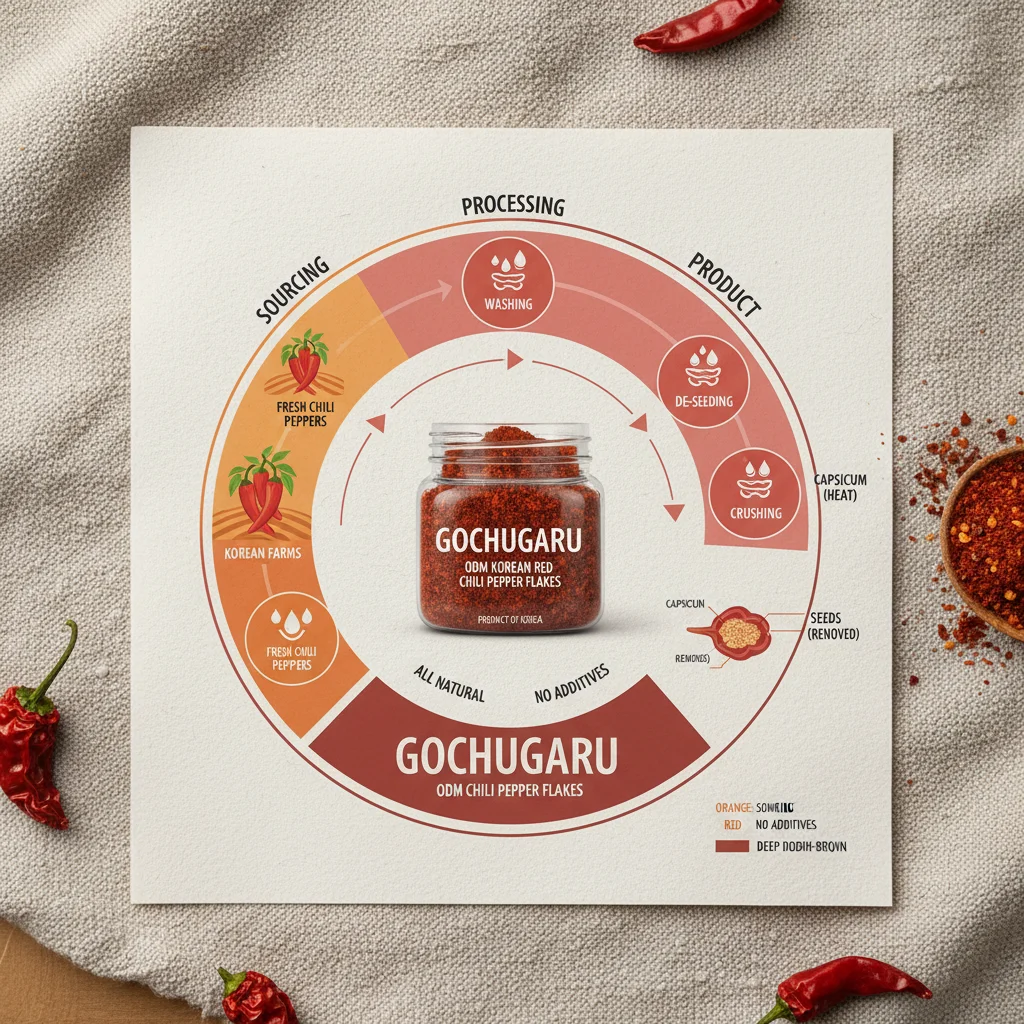
The production of industrial-grade chili involves a complex transition from raw agricultural output to a stabilized raw material. The process begins with controlled harvesting and drying, where moisture levels must be capped (typically at 11% max) to prevent mold growth and enzyme degradation.
Following drying, the material undergoes deep processing. For those seeking odm dried whole peppers or crushed variants, the key is maintaining the integrity of the capsaicinoids while removing impurities. This requires specialized machinery that can handle different particle sizes—ranging from 0.5mm to 5mm—without causing excessive heat friction that could alter the aromatic profile.
In B2B spice procurement, "heat" is not a subjective term but a measurable technical parameter defined by Scoville Heat Units (SHU). A pungency of 35,000 SHU represents a high-potency threshold suitable for commercial food manufacturers who require a bold, consistent burst of flavor across millions of units.
Beyond SHU, the seed content is a vital engineering variable. Depending on the final application—whether it is for artisanal pizza toppings or industrial sausage fillers—the seed ratio may need to be adjusted to 50%, 30-40%, or completely deseeded. This affects not only the visual appeal but also the texture and the concentration of heat within the product.
Furthermore, chemical purity is non-negotiable. Premium industrial grades must be 100% natural with zero Sudan Red, ensuring compliance with the "clean label" movement. This requirement is particularly strict for exports entering the USA and EU markets, where regulatory scrutiny on synthetic dyes is intense.
Traditional drying methods often leave the product vulnerable to aflatoxins and ochratoxin A, which are critical safety risks in the spice industry. To mitigate this, advanced sterilization technologies have been integrated into the processing line.
This sterilization process also extends the shelf life of the product by reducing the moisture activity and neutralizing spores. When combined with secure 25kg Kraft bags lined with plastic film, the product remains stable during long-distance maritime logistics, preventing moisture re-absorption in humid environments.
Evaluating the quality of odm dried whole peppers requires a multi-dimensional approach. While SHU measures the heat, the overall value is determined by the synergy between purity, sterilization efficiency, and the ability to customize specifications.
Professional buyers often use a normalized scoring system to compare standard grades against premium offerings. This assessment considers the risk of contamination, the precision of particle size distribution, and the reliability of the monthly supply capacity to ensure production continuity.
For commercial food manufacturers, the integration of OEM chili products is a strategic decision. Whether the end product is a high-end artisanal soup or a mass-market snack, the consistency of the raw material determines the stability of the final taste profile. By utilizing customizable particle sizes (e.g., 0.5-2mm or 3-5mm), engineers can control the release of heat during the cooking or mixing process.
Furthermore, the ability to secure a stable monthly supply—such as a 500MT capacity—is essential for preventing production downtime. In a global supply chain, having a partner who can maintain ISO9001, ISO22000, BRC, and FDA certifications ensures that the OEM integration does not introduce regulatory risks into the manufacturing facility.
The spice industry is moving toward a more data-driven approach to quality. We expect to see an increase in the use of precision analytics to map the capsaicin distribution within a single batch, allowing for even tighter SHU tolerances.
Sustainability in sourcing is also becoming a primary driver. The trend is shifting toward vertically integrated supply chains—where the processor owns the farms—to ensure complete traceability from seed to shipment. This reduces the risk of adulteration and ensures a more sustainable environmental footprint.
Finally, the adoption of smarter sterilization techniques that preserve more of the natural antioxidants and vitamins in chilies will likely become a competitive advantage for premium suppliers, catering to the growing health-conscious consumer segment.
When selecting a supplier for industrial spices, procurement managers should move beyond price-per-kilogram and adopt a total value assessment. This includes evaluating the supplier's sterilization technology, certification portfolio, and the flexibility of their OEM customization options.
A critical part of this evaluation is the "Investment Return" logic: while premium grade products may have a higher initial cost, they reduce the risk of batch failure, lower the microbial load in the factory, and ensure global market access through BRC and FDA compliance.
The following matrix provides a framework for comparing different configuration profiles based on typical industrial requirements for odm dried whole peppers and crushed chili.
| Configuration Profile | Purity / Sterilization | Technical Focus | Recommended Use Case |
|---|---|---|---|
| Basic Grade | Standard Drying | Cost Optimization | Local Market Snacks |
| Standard Industrial | Steam Sterilized | Consistency | Mass Market Sauces |
| High-Duty Premium | Microwave & Steam | Microbial Control | EU/USA Export Goods |
| Precision OEM | Customized Seed/Size | Flavor Profiling | Artisanal Gourmet Foods |
| Ultra-Pure Grade | 100% Natural/Zero Sudan | Clean Label Compliance | Health-Conscious Brands |
| Global Logistics Profile | Moisture < 11% / Kraft Bag | Shelf-Life Stability | Intercontinental Shipping |
A pungency of 35,000 SHU provides a powerful and authentic aromatic heat that is highly sought after for industrial and gourmet applications. In a commercial setting, this level of heat ensures that the chili can withstand the dilution that occurs when mixed into large volumes of other ingredients, such as in sausage production or large-batch soup manufacturing, while still maintaining a distinct and consistent spice profile across the final product line.
Seed content significantly influences both the visual appearance and the heat distribution of the product. High seed content (e.g., 50%) often provides a different textural experience and can alter the perceived heat intensity. Conversely, deseeded options are preferred for products where a smooth texture and a more concentrated, pure chili flavor are required. Customizing the seed ratio allows brands to fine-tune their recipe to meet specific consumer preferences for "visual spice" versus "pure heat."
Yes, microwave heat and steam sterilization is significantly more effective for high-grade exports. Traditional drying often fails to eliminate deeply embedded spores and may not sufficiently reduce aflatoxin and ochratoxin A levels. The advanced method ensures a much lower microbial load and purity without the use of harsh chemicals, which is essential for meeting stringent European and FDA safety standards. This results in a safer product with a longer shelf life and a cleaner label.
For bulk industrial orders, the Minimum Order Quantity (MOQ) typically starts at 1,000kg to ensure production efficiency and quality consistency. Lead times vary based on the level of customization required (such as specific particle sizes or seed ratios) and the current monthly capacity. With a supply capacity of 500MT per month, established facilities can usually ensure a stable flow of materials to prevent production stoppages for their B2B partners.
To maintain a moisture level of 11% max, products should be packed in secure 25kg Kraft bags lined with a high-density plastic film. This dual-layer approach provides a robust barrier against external humidity and contaminants during transit. For optimal shipping, loading should be optimized (e.g., 15MT per 20'GP or 25MT per 40'FCL) to minimize movement and potential bag rupture, ensuring the product remains dry and uncontaminated until it reaches the facility.
For the US and EU markets, a combination of ISO9001 (Quality Management), ISO22000 (Food Safety Management), BRC (British Retail Consortium), and FDA registration is critical. These certifications prove that the manufacturer follows strict HACCP protocols and that the product meets international safety thresholds for contaminants like aflatoxins. Additionally, HALAL certification is often required to expand the product's reach into diverse global markets.
The transition from generic sourcing to a technical OEM approach for odm dried whole peppers is no longer optional for brands targeting the premium global market. The evidence suggests that investing in microwave and steam sterilization, along with precise SHU and seed ratio controls, directly correlates with reduced regulatory risk and higher product consistency.
For procurement managers, the practical implication is clear: the value of a supplier is measured by their ability to maintain a stable, certified supply chain that can adapt to specific engineering requirements. By prioritizing purity and technical compliance over the lowest unit price, manufacturers can ensure their products not only meet international safety standards but also deliver a superior and consistent sensory experience to the end consumer.