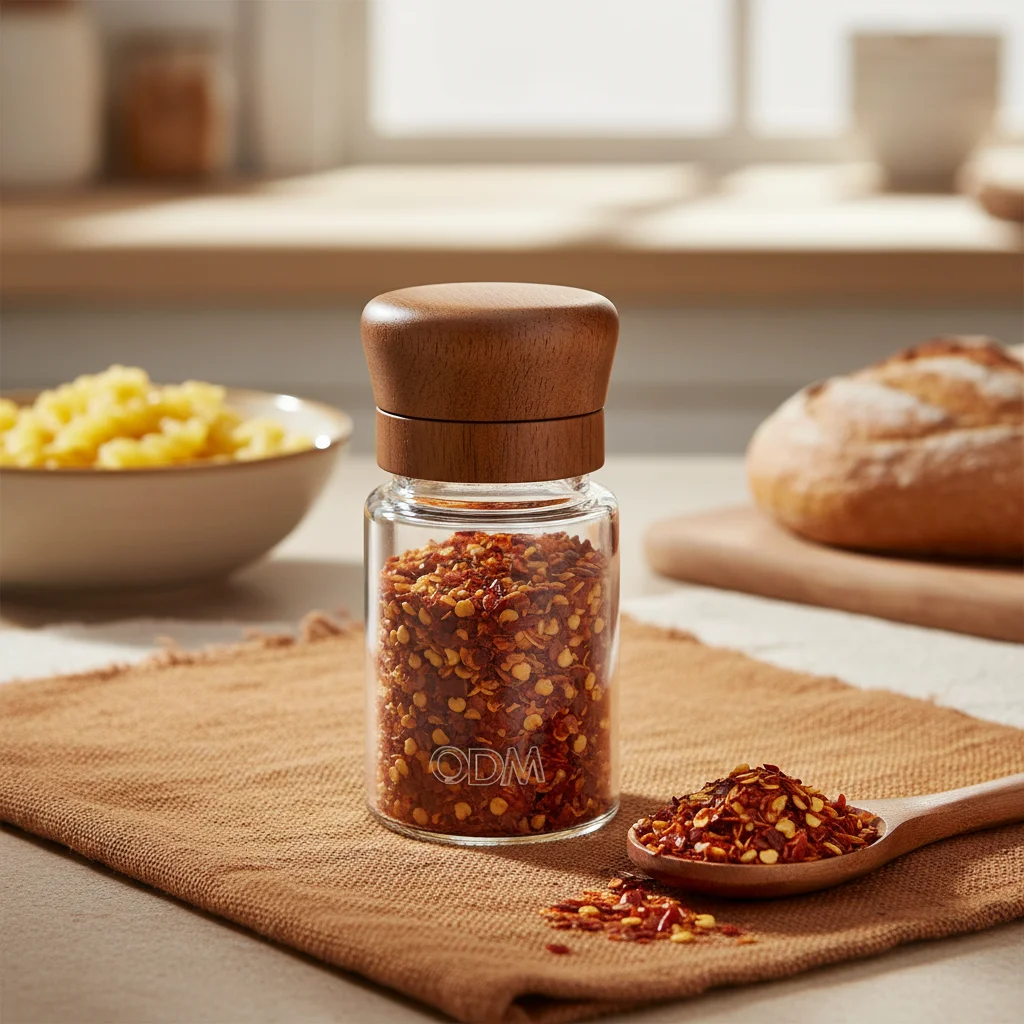
The global appetite for authentic Asian flavors has surged, placing a premium on the precision of the odm korean chili powder recipe. For food manufacturers and private label brands, achieving that signature balance of smoky heat, vibrant crimson color, and subtle sweetness is no longer just a culinary goal but a commercial necessity to capture the Gochugaru market.
Understanding the intricacies of an ODM (Original Design Manufacturing) approach allows businesses to leverage professional expertise in sourcing and processing without investing in their own manufacturing plants. By focusing on a specialized odm korean chili powder recipe, brands can ensure consistency across large batches, meeting stringent international food safety standards while maintaining traditional flavor profiles.
Whether you are targeting the gourmet retail sector or the industrial food service market, the ability to customize heat levels and granulation is key. This guide explores how a professionally developed odm korean chili powder recipe transforms raw capsicum into a high-value commercial product that drives consumer loyalty and brand growth.

The Fundamentals of an ODM Korean Chili Powder Recipe
At its core, an odm korean chili powder recipe is a blueprint for creating a consistent, commercially viable version of traditional Korean red pepper flakes. Unlike home recipes, an ODM formulation accounts for raw material variance, seasonal changes in Scoville Heat Units (SHU), and the technical requirements of large-scale dehydration and milling.
The focus is on achieving a "standardized authenticity." This means the recipe must dictate not only the ratio of ingredients but also the precise temperature and humidity during the drying phase to preserve the natural carotenoids that give the powder its iconic bright red hue.
Global Market Demand and Industrial Integration
The global demand for Korean condiments has seen an exponential rise, mirrored by the "K-Wave" in culture and cuisine. According to international trade data, the import of chili-based seasonings has grown steadily, as Western markets move beyond simple "heat" toward complex, fermented flavors. This creates a significant opportunity for brands that can deploy a professional odm korean chili powder recipe to enter the market quickly.
However, the challenge lies in the volatility of the raw chili market. Sourcing high-quality pods that meet the specific requirements of a Korean profile requires a robust supply chain. Many companies struggle with "batch drift," where one shipment of powder is significantly spicier or paler than the last, damaging consumer trust and brand reliability.
By integrating an ODM model, companies shift the burden of quality control to the manufacturer. The manufacturer uses a scientific approach to the odm korean chili powder recipe, blending different harvests to ensure that the final product remains identical whether it is produced in January or July.
Core Components of Premium Gochugaru Production
The first pillar of a successful odm korean chili powder recipe is raw material selection. The choice between different cultivars of Capsicum annuum determines the baseline sweetness and pungency. In industrial settings, this involves rigorous grading of pods based on size, moisture content, and initial color.
Precision milling is the second critical component. A commercial odm korean chili powder recipe must specify the exact mesh size. Whether the client needs a coarse "cut" for kimchi or a fine "powder" for sauces, the milling process must prevent overheating, which can oxidize the oils and dull the flavor.
Finally, additive control and purity are paramount. Modern food safety regulations demand the absence of artificial dyes or anti-caking agents. A high-end odm korean chili powder recipe relies on natural processing techniques and vacuum sealing to maintain shelf-life and potency without compromising the "clean label" appeal.
Scalability and Cost Efficiency in ODM Manufacturing
Transitioning from a boutique batch to industrial tonnage requires a fundamental shift in how the odm korean chili powder recipe is executed. Scalability is achieved through automated drying systems and synchronized milling lines that reduce labor costs while increasing throughput. This efficiency allows brands to lower their Price-Per-Unit (PPU) without sacrificing the quality of the final seasoning.
Moreover, the cost-efficiency of an ODM partnership stems from shared infrastructure. Brands do not need to invest in expensive cold-storage warehouses or HACCP-certified facilities; instead, they utilize the manufacturer's existing ecosystem to bring their odm korean chili powder recipe to market in a fraction of the time.
Comparative Efficiency of ODM Korean Chili Powder Recipe Methods
Real-World Applications Across Food Industries
The versatility of a professional odm korean chili powder recipe extends far beyond traditional kimchi. In the snack food industry, these customized powders are used to create "K-style" spicy chips and nuts, where the powder must adhere well to the surface and remain stable under high-temperature frying or baking.
In the ready-to-eat (RTE) meal sector, such as frozen bibimbap bowls, the odm korean chili powder recipe is often adapted into a paste or a concentrated seasoning mix. This requires the powder to have specific solubility and emulsification properties to ensure that the sauce remains smooth and visually appealing after reheating.
Long-Term Value of Standardized Flavor Profiles
The true value of investing in a proprietary odm korean chili powder recipe lies in brand equity. When a consumer tastes a product and recognizes the same depth of flavor every time, it builds an emotional connection of trust and reliability. This consistency is the hallmark of global food giants and is only possible through rigorous recipe standardization.
From a financial perspective, a standardized recipe reduces waste. When the odm korean chili powder recipe is precise, there is no need for "corrective blending" at the end of the production line, which often involves adding more expensive ingredients to fix a failed batch.
Furthermore, standardization simplifies international regulatory compliance. By having a fixed recipe with a known chemical composition, brands can easily generate the necessary documentation for FDA, EFSA, or other health authority approvals, speeding up the time-to-market for global expansion.
Future Innovations in Chili Processing Technology
The future of the odm korean chili powder recipe is being shaped by "Green Tech." Freeze-drying technology is replacing traditional heat-drying, allowing for the preservation of nearly 100% of the original vitamins and volatile aroma compounds, resulting in a powder that tastes like fresh chili.
Digital transformation is also playing a role, with AI-driven sensory analysis now used to "tune" recipes. By analyzing the molecular profile of a target flavor, manufacturers can adjust the odm korean chili powder recipe in real-time, ensuring that the heat and color are mathematically aligned with consumer preferences.
Sustainability is the final frontier. The industry is moving toward closed-loop water systems and solar-powered dehydration plants, ensuring that the production of high-quality chili powder doesn't come at an environmental cost.
Analysis of Production Parameters for ODM Korean Chili Powder Recipe
| Parameter |
Industrial Standard |
Impact on Flavor |
Quality Score (1-10) |
| Drying Temperature |
45°C - 60°C |
Preserves color/aroma |
9 |
| Mesh Size (Coarse) |
10-20 Mesh |
Textural "bite" for Kimchi |
8 |
| Moisture Content |
< 12% |
Prevents clumping/mold |
10 |
| Capsaicin Level |
Custom (2k-10k SHU) |
Determines heat profile |
9 |
| Milling Speed |
Low-RPM Cold Mill |
Avoids oil oxidation |
7 |
| Sourcing Origin |
Certified Korean/Premium |
Authentic earthy notes |
10 |
FAQS
The primary advantage is the ability to customize flavor, heat, and texture to your brand's specific needs while ensuring industrial-scale consistency. A standard powder is generic, but an ODM recipe is engineered to provide a unique competitive edge, ensuring every batch is identical in color and pungency.
Authenticity is ensured through strict sourcing of raw capsicum cultivars and following traditional processing steps—such as controlled drying and specific milling—within a modern facility. Requesting certificates of analysis (CoA) and sampling for colorimetric and SHU consistency is recommended.
Yes, ODM manufacturers can blend different grades of chili pods to reach a precise Scoville Heat Unit (SHU) target. Whether you want a mild, sweet paprika-style powder or a fierce, pungent Gochugaru, the recipe can be calibrated to meet your exact specifications.
Absolutely. By leveraging an ODM's existing machinery and supply chain, small brands avoid the massive capital expenditure of building a factory. This allows them to scale their product line organically while maintaining the quality of a world-class manufacturer.
When produced using a professional odm korean chili powder recipe with moisture levels below 12% and vacuum packaging, the shelf life typically ranges from 12 to 24 months, provided it is stored in a cool, dark place.
Yes, reputable ODM partners operate under ISO, HACCP, and BRC certifications. Their recipes are designed not only for flavor but for safety, ensuring the removal of contaminants and the prevention of microbial growth during the drying and milling process.
Conclusion
Implementing a professional odm korean chili powder recipe is the most strategic way for food brands to balance authenticity with industrial efficiency. By focusing on precision sourcing, calibrated milling, and standardized quality control, companies can deliver a high-value product that meets the rigorous demands of the global market while maintaining the soulful taste of traditional Gochugaru.
As the industry evolves toward AI-driven flavor tuning and sustainable "Green Tech" processing, the gap between artisanal quality and industrial scale will continue to close. We encourage brands to partner with experienced manufacturers who can transform a technical recipe into a market-leading product. Visit our website for more professional solutions: www.xurichili.com